
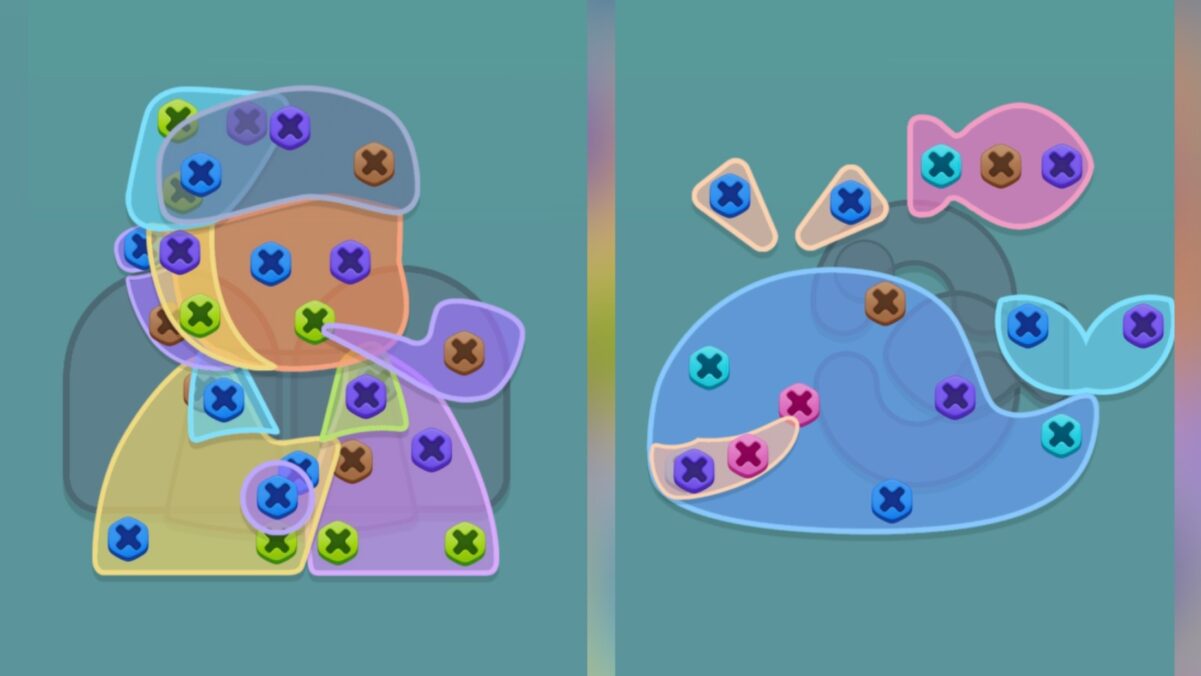
Screw Jam Handler hit the casual gaming scene in early 2025 and quickly racked up over 1 million installs. Developed by Playful Bytes, this screw puzzle game promised a “delightful twist on classic puzzling”—a brain-teasing challenge where you unscrew nuts and remove colorful boards.
Quick Verdict and Test Basis
- Test basis: at least 30 minutes of recorded hands-on play; the uncut gameplay segment and screenshots on this page are primary evidence.
- Best for: Players who enjoy spatial screw-sorting puzzles and can tolerate regular ad interruptions.
- Watch for: Spare-hole limits and continue offers can make later failure feel commercially engineered.
- Verdict: The core puzzle is readable and satisfying; the surrounding ad and offer cadence is the main drawback.
- Review updated: July 23, 2026. Store ratings, prices, downloads, events and ad frequency may change by version or region.
Our scores are editorial judgments, not scientific measurements. See the Editorial Policy for testing, sourcing, corrections and commercial disclosure rules.
I went in expecting a satisfying logic puzzle. What I found was a game with a surprisingly solid core loop buried under layers of aggressive monetization. Here’s my honest breakdown using Yu-kai Chou’s Octalysis Framework.
What Is Screw Jam Handler?
Here’s the simple version: you’re looking at a board covered in colorful screws and boards. Your job is to tap screws of the same color, put them into a box, and clear the board. The catch? You have a limited number of spare holes. Run out, and you lose.
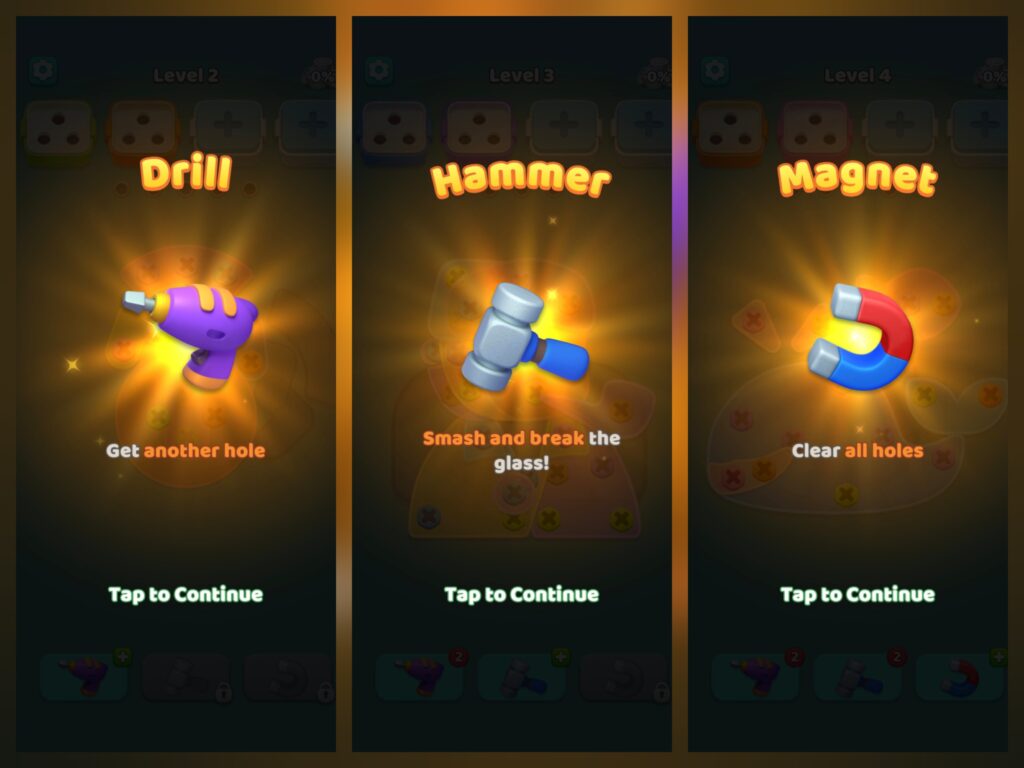
It sounds simple. It is simple—at first. But as more colors and layered boards show up, you’ve gotta plan your moves carefully. Use the right tools—Drill, Hammer, Magnet—to break glass, get another hole, or clear all holes.
The rules are easy to learn, tough to master. Hundreds of levels, each one a fresh puzzle. On paper, it’s a winner.
Octalysis Scorecard: Screw Jam Handler
| Core Drive | Score (1-10) | Key Design Manifestations |
|---|---|---|
| Epic Meaning & Calling | 3 | No story, no narrative. You‘re just breaking glasses. |
| Development & Accomplishment | 6 | Level progression, “VICTORY!” screen, level numbers. No star ratings or mastery. |
| Empowerment & Creativity | 5 | Boosters (Drill, Hammer, Magnet) help. But core gameplay is tapping — minimal strategy. |
| Ownership & Possession | 4 | No skins, no collections, no customization. Just levels cleared. |
| Social Influence & Relatedness | 2 | No leaderboards, no friends, no sharing. Pure solo. |
| Scarcity & Impatience | 7 | Timer creates urgency. “Almost There!” offers continue options. Starter Packs and limited offers. |
| Unpredictability & Curiosity | 6 | Glass layouts change each level. But core loop is repetitive. |
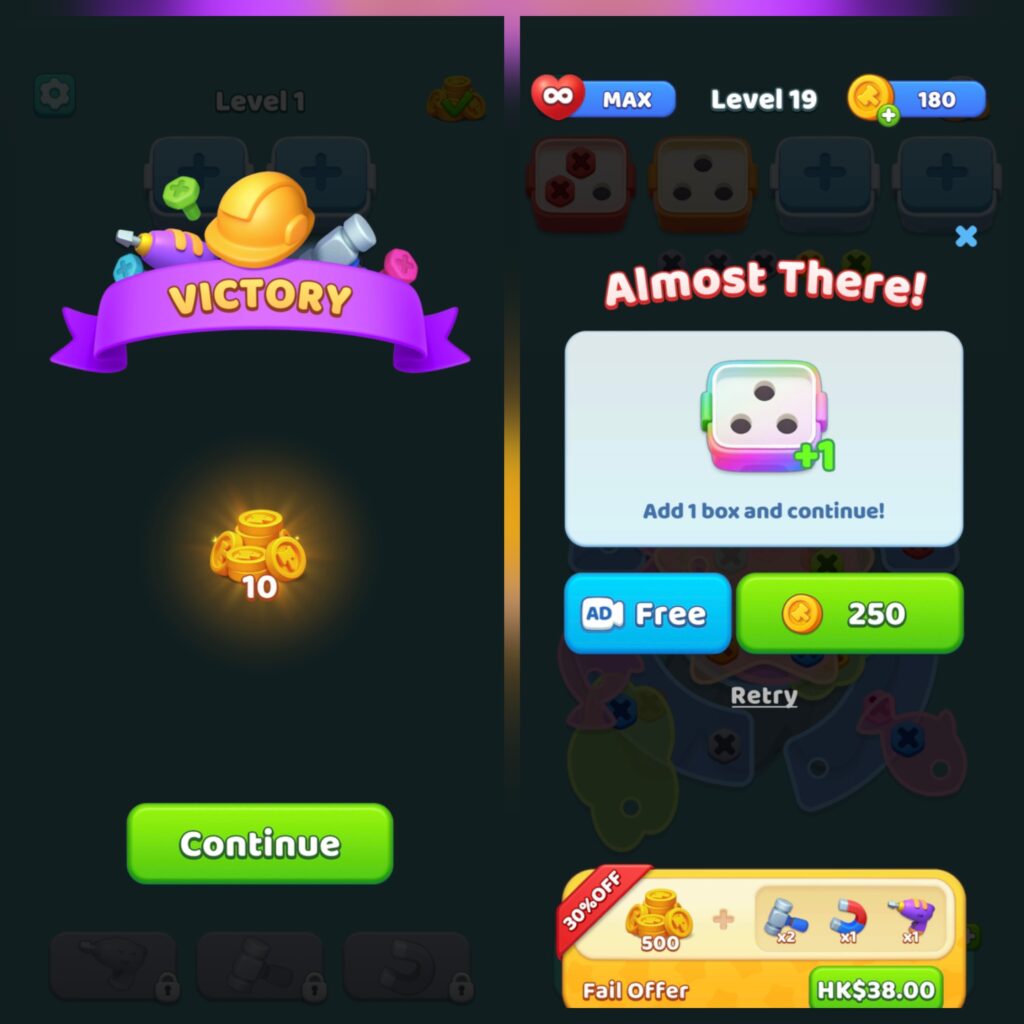
| Loss & Avoidance | 7 | Timer creates fear of losing. “Add 1 box and continue!” offers. Fail Offers (30% OFF) push you to spend. |
Evaluation Notes
Scoring range: 1–10. Higher scores reflect stronger implementation of the core drive and greater player motivation.
GScore (Gamification Score): Calculated using the Octalysis Framework tool.
Octalysis Radar Chart
Based on the scores above, here’s what the radar would look like:
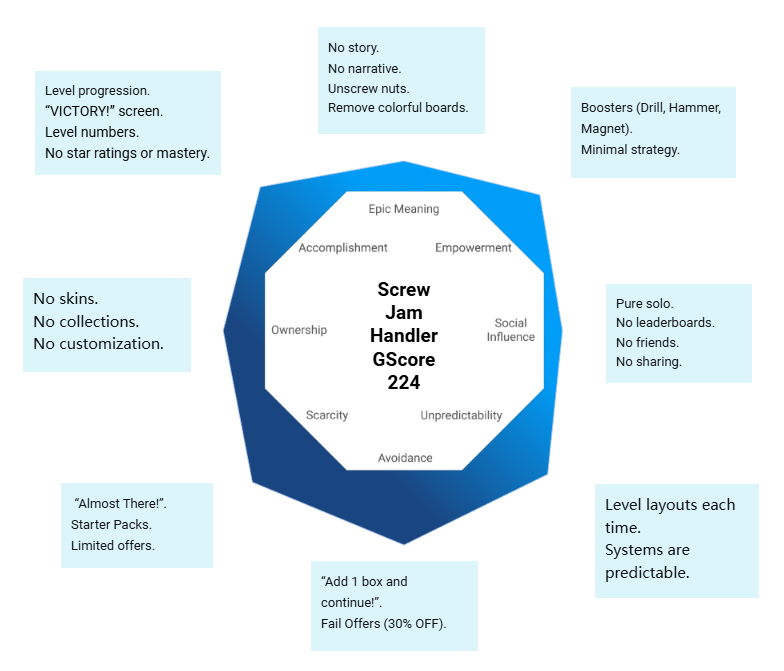
The chart reveals a game that’s heavily left-brain and black-hat dominant—relying on extrinsic, fear-based motivators (scarcity, loss avoidance) rather than intrinsic, positive ones (meaning, creativity, social connection). This isn’t necessarily bad—many successful casual games use this formula. But the low scores in Social (2), Ownership (4), and Meaning (3) show massive gaps.
The game is designed to keep you hooked, not happy. And there’s a difference.
Octalysis Detailed Analysis
1. Epic Meaning & Calling — Score: 3/10
Screw Jam Handler gives you nothing here. No story. No character. No mission. You’re just… unscrewing screws. There’s no “why” behind your actions. You clear a level, and the next one pops up. That’s it.
The “Victory!” screen after each level gives you a tiny moment of celebration. But it’s fleeting. There’s no narrative thread pulling you forward.
2. Development & Accomplishment — Score: 6/10
This is where the game almost works. Each level is a new puzzle, and the difficulty does ramp up—more colors, trickier board layouts, tighter margins for error. When you finally crack a tough level, there’s a real “yes!” moment.
The game shows your level progress clearly, and you can see yourself moving up.
Puzzle-solving provides some accomplishment, but the progression feels… flat. You clear levels, but there’s no star system, no score tracking, no sense of mastery. You finish and move on.

3. Creativity & Feedback — Score: 5/10
This is where the game could shine — but doesn’t.
What works:
- Boosters: Drill, Hammer, Magnet give you real help when you‘re stuck.
- Choice: You pick which nut to unscrew first. Some strategy in prioritizing.
What doesn’t work:
- Core gameplay is tapping. You‘re not solving complex puzzles. You’re just… unscrew nuts until remove colorful boards.
- Limited depth. Once you‘ve seen a few levels, you’ve seen them all.
One player might say: “It‘s a good time-killer, but don’t expect brain-teasers.”
Some players have complained about color clarity, but from my own experience, I haven’t noticed any issues with color recognition so far.
4. Ownership & Possession — Score: 4/10
Weak ownership hooks. No collection, no gallery, no sense of building something lasting.
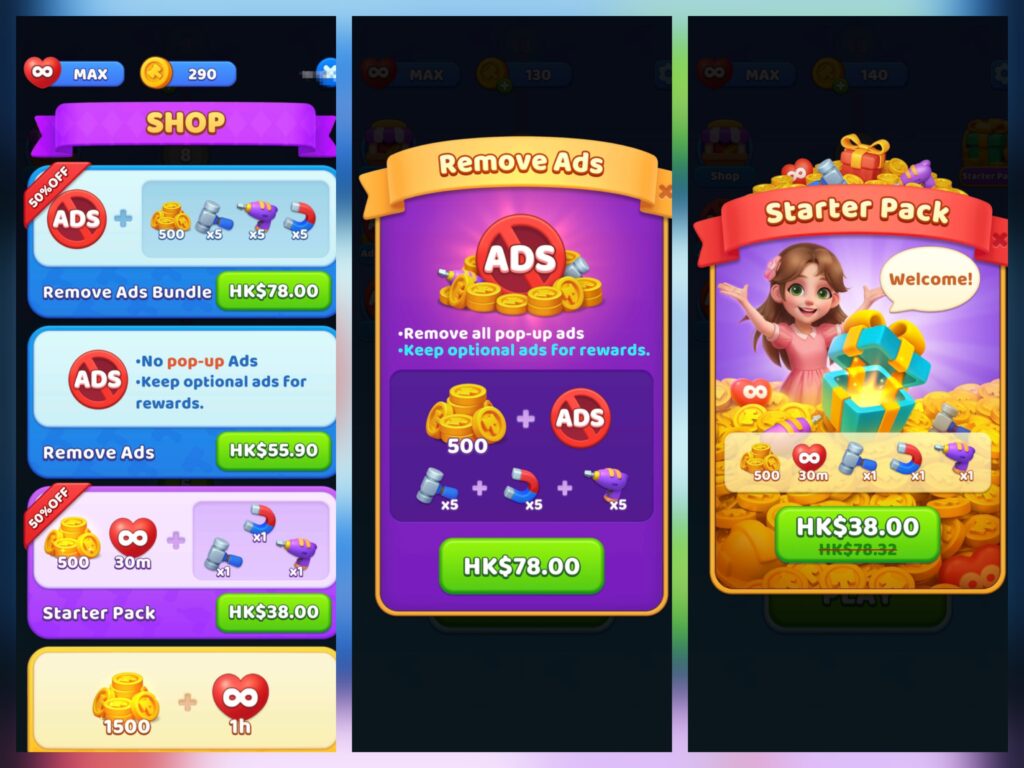
You’ve got tools—Drill, Hammer, Magnet. But they feel more like consumable resources than owned items. The “Shop” sells boosters, Starter Packs, and Ad removal bundles. But there’s no collection system, no gallery of completed levels, no sense of building anything.
If you‘re a collector, this game won’t scratch that itch.
5. Social Influence & Relatedness — Score: 2/10
The drive fueled by social elements—competition, cooperation, acceptance.
Absolutely nothing here. No leaderboards. No friend systems. No sharing. No multiplayer. No guilds.
The only “social” element? The ads served by Meta. That’s not a feature—that’s monetization.
6. Scarcity & Impatience — Score: 7/10
This is the game’s dominant drive.
The spare hole mechanic creates real tension. Run out of holes, and you lose. That “one more move” pressure keeps you on edge. The tools—Drill, Hammer, Magnet—are limited, so you’ve gotta save them for the right moment.
Then there’s the ad economy. The game pushes ads hard. “Remove Ads Bundle” for HK$78.00. “Starter Pack” for HK$38.00. “Fail Offer” at 30% off for HK$38.00 when you lose. The game knows exactly when to hit you with an offer—right when you’re frustrated.
One review put it bluntly: “For those sensitive to aggressive monetization, Screw Jam Handler may prove more frustrating than fun”. Another said the ad frequency is a “significant portion of player frustration”.
The scarcity creates urgency. But it also creates annoyance.
7. Unpredictability & Curiosity — Score: 6/10
Level variety provides some curiosity, but the surrounding systems lack surprise.
Each level is a new board layout. You don’t know what’s coming next—new colors, new configurations, new challenges. That “what’s next?” factor keeps you tapping.
The “Choose a glass to break!” prompt adds a small element of choice and unpredictability. Which glass do you pick? What’s behind it? That’s a decent hook.
But the unpredictability stops there. The game systems themselves are predictable. No random events. No surprise rewards. No “wow, didn’t see that coming” moments outside the level layouts.
8. Loss & Avoidance — Score: 7/10
Loss avoidance is powerful but feels manufactured. The fear of losing drives engagement, but it’s built on artificial difficulty.
This is the game’s strongest driver—and it’s built entirely around fear.
Run out of spare holes, and you lose. That’s it. Game over. The “Fail Offer” pops up immediately, offering you a 30% discount to continue. The pressure is real.
The “Almost There!” screen is designed to make you feel so close—just one more move!—so you’re more likely to spend or watch an ad to keep going.
You don’t want to lose your progress. You don’t want to watch another ad. But the game makes you choose between the two.
One reviewer noted the game “is not the challenging puzzle game it advertises itself as. Only a handful of levels are actually difficult”. That suggests the difficulty spikes are artificial—designed to trigger loss avoidance and drive monetization, not genuine challenge.
Conclusion
Screw Jam Handler is a game of two halves.
The core puzzle loop? Actually pretty good. The “tap screws, manage holes, clear the board” mechanic is satisfying. The levels are varied. The difficulty curve, when it’s not artificially spiked, feels natural. One reviewer called it “aesthetically cute” with a “really nice UI” that “helped soothe my brain”.
But the monetization? It’s relentless. Ads everywhere. Pop-ups. Offers. Bundles. The game constantly reminds you that you could be having a better experience—if you just paid up.
For players who don’t mind frequent ad interruptions, it’s a decent way to kill time. For everyone else? It’s not fun.
Review Evidence and Sources
- Primary evidence: the gameplay recording and original screenshots embedded in this review.
- Screw Jam Handler official Google Play listing, checked July 23, 2026.
- Octalysis framework tool, used as the structure for our editorial scoring.
If a material game update changes this review, we will add a dated correction or retest note.
Leave a Reply